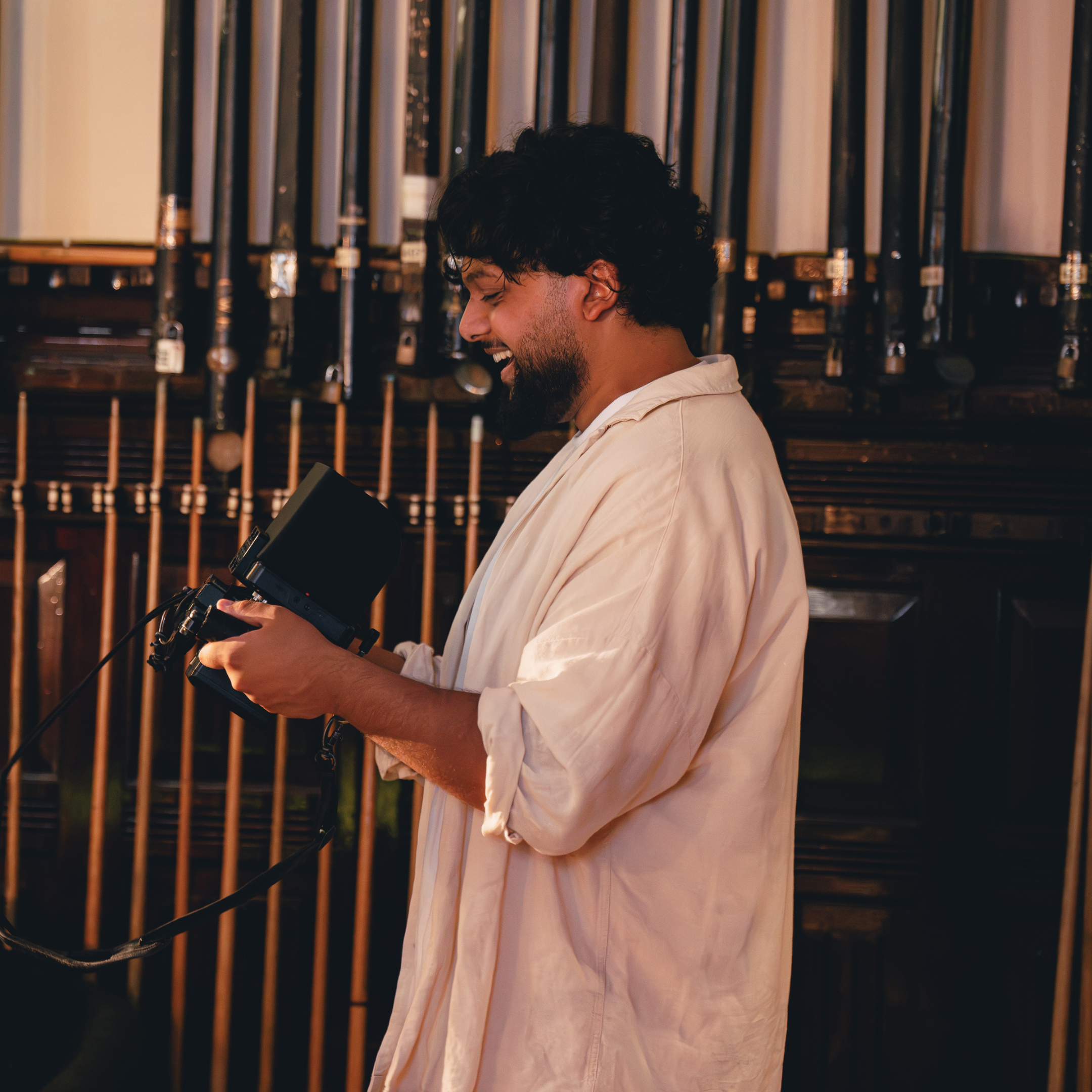
Before I’d watched any of Azim Miah’s work, I was struck by the way he spoke about creativity.
He first reached out to me through social media, and after spending an evening exploring his work, it was obvious this wasn’t simply someone making music videos. Every project felt intentional. Every visual carried purpose. As someone who spends so much time speaking to musicians, it felt only right to shine a light on one of the creatives helping bring their stories to life. Music videos are often treated as an afterthought, but the right visual can completely transform how a song is experienced. People like Azim remind us why they deserve to be celebrated in their own right.
Born and raised in The Mounts, Northampton, Azim describes himself as a British-Bangladeshi film director with one clear ambition – “to be among the greats, represent my community, and use my work to help others.”
His childhood was a collision of cultures. Gangsta rap poured through one speaker, Bollywood soundtracks through another, while afternoons disappeared into wrestling games with rock music blasting in the background. Saturdays weren’t spent in film school or surrounded by industry connections. Instead, they were spent experimenting with an old laptop webcam, making YouTube videos simply because creating felt natural.
“I wasn’t surrounded by creatives,” he tells me. “A lot of people didn’t believe it was a realistic career.”
That never seemed to matter.
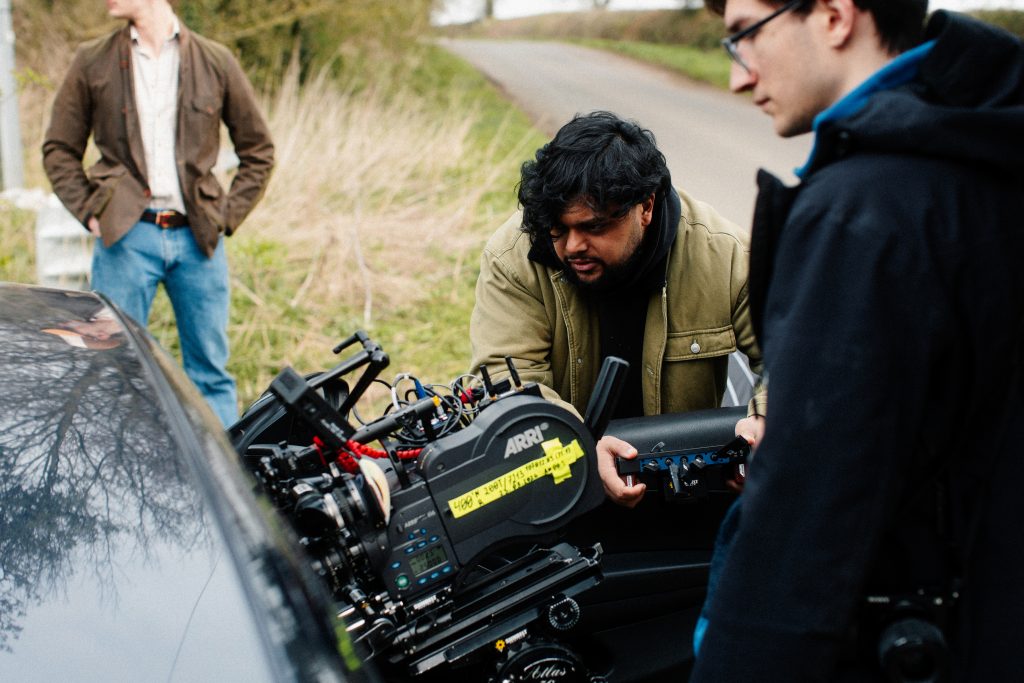
While others saw filmmaking as an impossible dream, Azim simply kept making things.
His early teenage years were far from easy. Feeling misunderstood at school, facing bullying and often feeling like he didn’t quite belong, filmmaking became both an escape and a place where he could exist without explanation.
“I’d speed walk home from school, eat, then make videos from 4pm until 11pm every day,” he says. “I felt more understood by strangers online than by people around me.”
Reading that, it’s hard not to see how those experiences continue to shape the work he creates today. Storytelling wasn’t just a hobby. It became a way of processing the world around him.
Music naturally became part of that journey.
Having grown up playing with different creative outlets, Azim found something uniquely freeing in combining film with independent music. Unlike commercial projects that often arrive with rigid expectations, working alongside artists allowed him to push ideas into far more experimental territory.
“I can express my own visual perspective while the artist shares their musical vision.”
That relationship starts long before a camera is switched on. Rather than arriving with a fixed concept, he begins with conversation.
“I always ask what a song means to them, why they made it and what their mental state was,” he explains. “People love to be listened to.”
It’s a simple approach, but one that feels increasingly rare. For Azim, building trust isn’t about directing someone – it’s about understanding them first.
That understanding is perhaps why his work refuses to settle for the obvious.
He believes the strongest music videos are the ones that challenge expectations rather than repeat them. Instead of leaning into familiar visual clichés, he’s more interested in creating something people haven’t seen before.
“I once made a hip-hop video inspired by 1930s German Expressionism,” he laughs. “Experimentation moves the culture forward.”
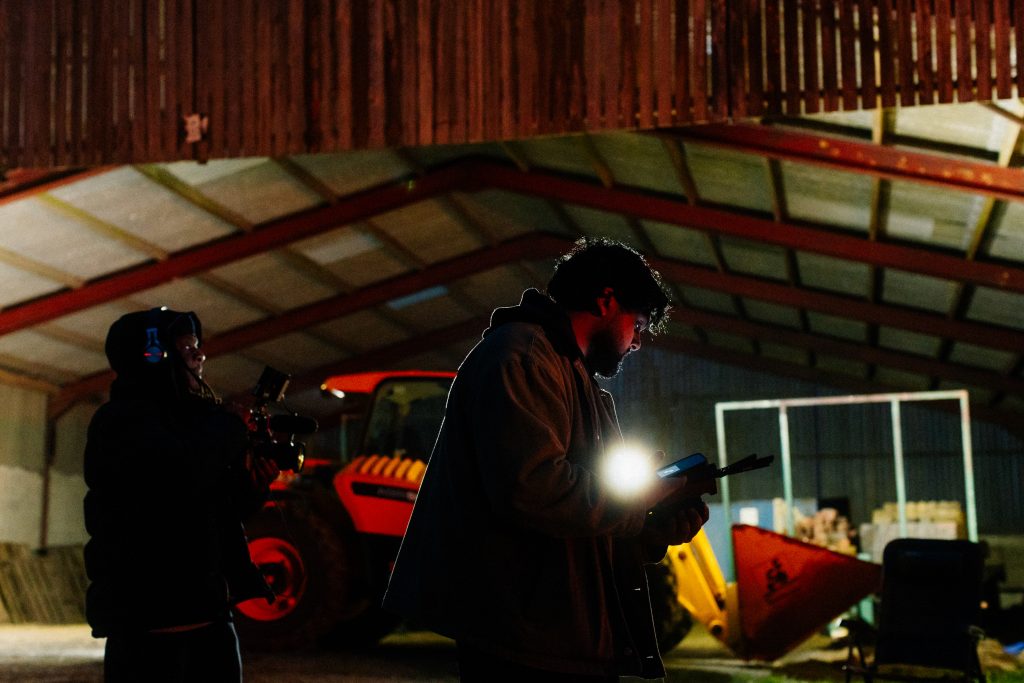
That willingness to experiment has already led to significant recognition, including his recent selection for the BFI NETWORK Immersive Storytelling Lab 2026 – an achievement he describes as feeling like “a stamp of approval.”
For many, recognition from an organisation like the BFI would simply be another career milestone. For Azim, it represents something much bigger.
“I’ve never forsaken my identity for success,” he says. “I want to show people you can thrive without money or ‘nepo’ connections.”
That message runs through almost everything he talks about.
Film, he believes, often feels like a “pay-to-win” industry, creating barriers for working-class creatives who simply don’t have the same access as others. But he also believes something far more valuable can’t be bought.
“You can’t buy hunger or life experience.”
Growing up in Northampton, navigating different cultures and often feeling like he belonged to neither entirely, shaped not only his identity but the stories he now wants to tell.
“I felt too Eastern for the West and too Western for the East.”
Rather than trying to fit neatly into either world, he embraced both, developing a voice that’s unapologetically his own.
Even away from filmmaking, that perspective continues to evolve.
He’s become far more conscious of protecting his own wellbeing after years of sacrificing sleep and pushing himself relentlessly. These days, quiet walks, spending time with friends and stepping away from work have become just as valuable as time behind a camera.
“They’re not creative activities,” he says, “but those life experiences feed into my work.”
His connection to grassroots music has taught him lessons beyond filmmaking too.
Working alongside independent musicians showed him the importance of visibility and building your own identity alongside your craft. While artists often become the face of their own projects, directors can easily disappear into the background.
“They taught me to build my own star power.”
Technology has helped level the playing field too. Looking back, he laughs at starting with little more than an iPhone 6s because it was all he could afford. Today, he believes accessibility has never been greater.
“If you have a smartphone, you already have a better start than I did.”
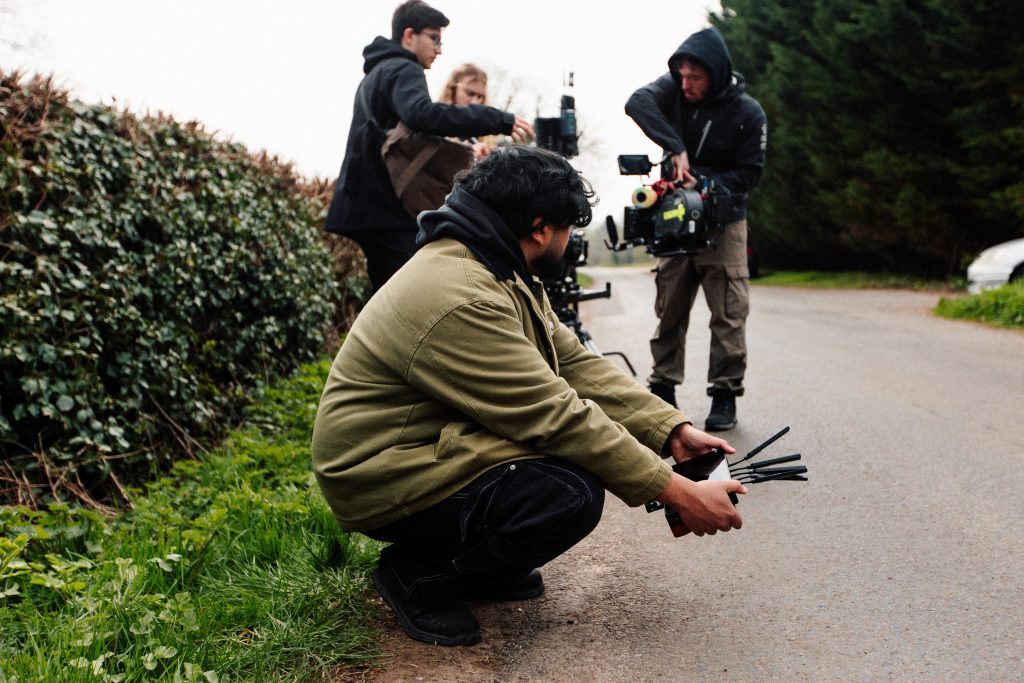
Perhaps the most powerful moment in his journey, though, came through a project that almost never happened.
His short film Pieces of an Adolescent explored the trauma of his own life between 2013 and 2019. Made by a two-person team for less than £100, it arrived during a period where he’d begun questioning everything.
“I thought this path was a fluke,” he admits. Instead, the project became something far more profound. “It saved my life.”
It’s difficult to read those words without understanding why storytelling means so much to him. Film isn’t simply what Azim does. It’s how he’s made sense of his own experiences, and now hopes to help others make sense of theirs.
Looking ahead, there’s plenty on the horizon. A country music video shot on 16mm film is releasing this summer, alongside a surreal Hubba Bubba commercial blending the worlds of Guy Ritchie and Quentin Tarantino. Conversations with major production companies are gathering pace, and after recently being named one of shots.net‘s top unsigned directing talents, the future feels full of possibility.
Yet success, for Azim, isn’t measured purely by bigger productions or bigger budgets.
“I want to help my friends find work and make a positive contribution to society.”
That sentence perhaps sums him up better than anything else.
The music industry often shines its brightest spotlight on the people standing in front of the camera, but conversations like this are a reminder that there are equally passionate creatives standing behind it. The people shaping how songs are remembered, giving artists another language to tell their stories through and quietly pushing culture forward frame by frame.
For young creatives wondering whether they need expensive equipment or the right connections before they begin, Azim’s advice is refreshingly uncomplicated.
“If you have a smartphone, you’ve already got more than I started with. Just start.”
Sometimes that’s all a great story has ever needed.
Check Azim’s work: https://azimmiah.com/
Follow here: https://www.instagram.com/azimmiah_/