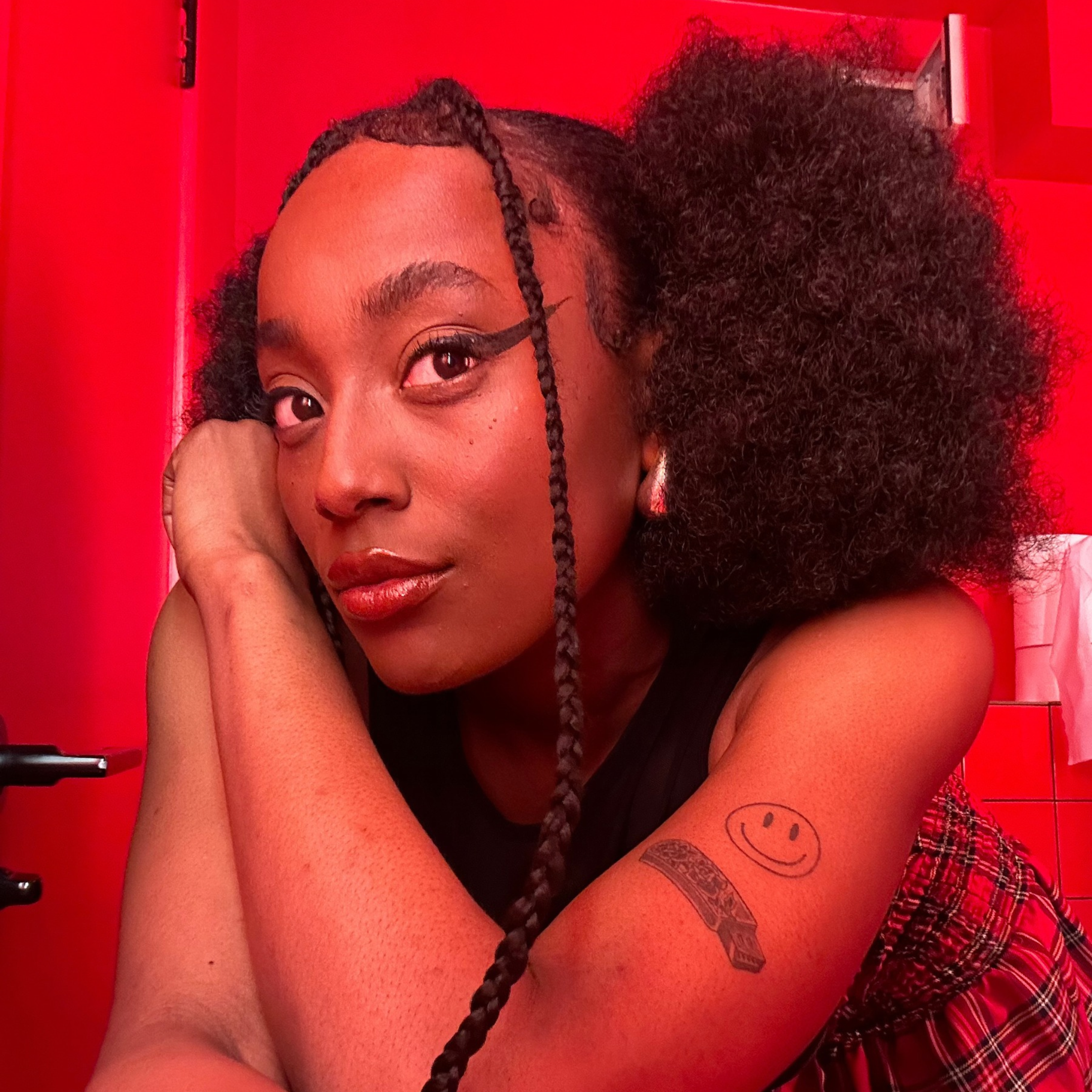
From the emergence of reggae and jungle to the development of house and techno, some of the most exciting movements in underground music have emerged from artists willing to challenge expectations, break conventions and bring seemingly unrelated sounds together. But what happens when that experimentation becomes something deeply personal? How can music bring together cultural heritage and family history to forge an entirely new musical identity? We caught up with Stormy J to explore her musical upbringing, the remarkable family legacy behind her work and the influences that led her to create a genre of her own.
For Stormy J, music has never fitted neatly into one category. Describing herself as eclectic and occasionally indecisive when it comes to her interests, she has always been drawn to different musical worlds. As she jokes: “How very Gemini of me!” But rather than choosing between these influences, she worked out a way to bring them all together. Stormy J brings a fresh take to the dancefloor, with jab-house now offering a fast-paced fusion of Grenadian jab jab traditions, Trinidadian soca, house, techno and underground rave culture. Typically sitting around 160 BPM, the sound challenges conventional expectations of house music while placing Caribbean culture and art firmly at its core.
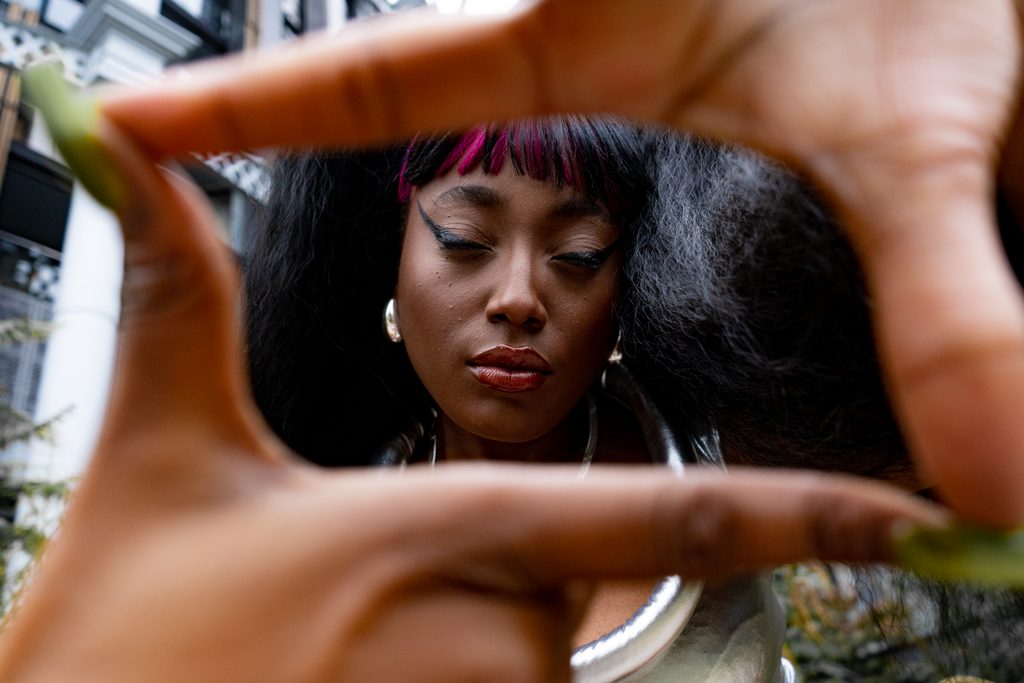
Credit: Dexter Prinsloo
That relationship between different musical identities has deep roots in her family history. Her maternal grandfather, Cape James, came from Grenada – affectionately known as Jab Jab Nation. Her grandmother came from Trinidad and Tobago, the birthplace of soca music. On her father’s side, her family is Jamaican. With Caribbean music and carnival traditions forming such an important part of her upbringing, their influence on her artistic identity was almost inevitable. And her family’s involvement in carnival culture extends well beyond attending the celebrations. Both of her parents are official Notting Hill Carnival judges, while her grandfather co-founded Ebony Steelband alongside Winston ‘P’ Joseph in 1969. The band began rehearsing in her grandfather’s garden shed in Acton, at a time when Caribbean communities in Britain faced widespread racial discrimination and hostility.
Stormy J recalls how racist neighbours would throw banana skins over the fence during rehearsals. Despite this, her grandfather refused to abandon what they were building. Ebony went on to become one of the UK’s most successful steelbands, winning numerous National Panorama titles and receiving the Queen’s Award for Voluntary Service in 2005. Beyond its musical achievements, the band has also helped introduce younger generations to steelpan and Caribbean culture through workshops, education and community opportunities. For Stormy J, upholding and celebrating that legacy remains very relevant to her experiences and motivations as an artist. One of her recent jab-house videos attracted more than 71,000 views online, but alongside that attention came a flood of racist comments. This experience served as a difficult reminder that, even generations later, artists can still encounter hostility simply for celebrating their cultural identities and community successes. Her grandfather’s resilience has become an important influence on how Stormy J approaches her music, DJing and wider creative work. That same determination to stand proudly in her identity, without compromising or diminishing any part of herself, shines through in her own artistic expression. As she explains: “You can honour the traditions that came before you while finding new ways to carry them into the future.”
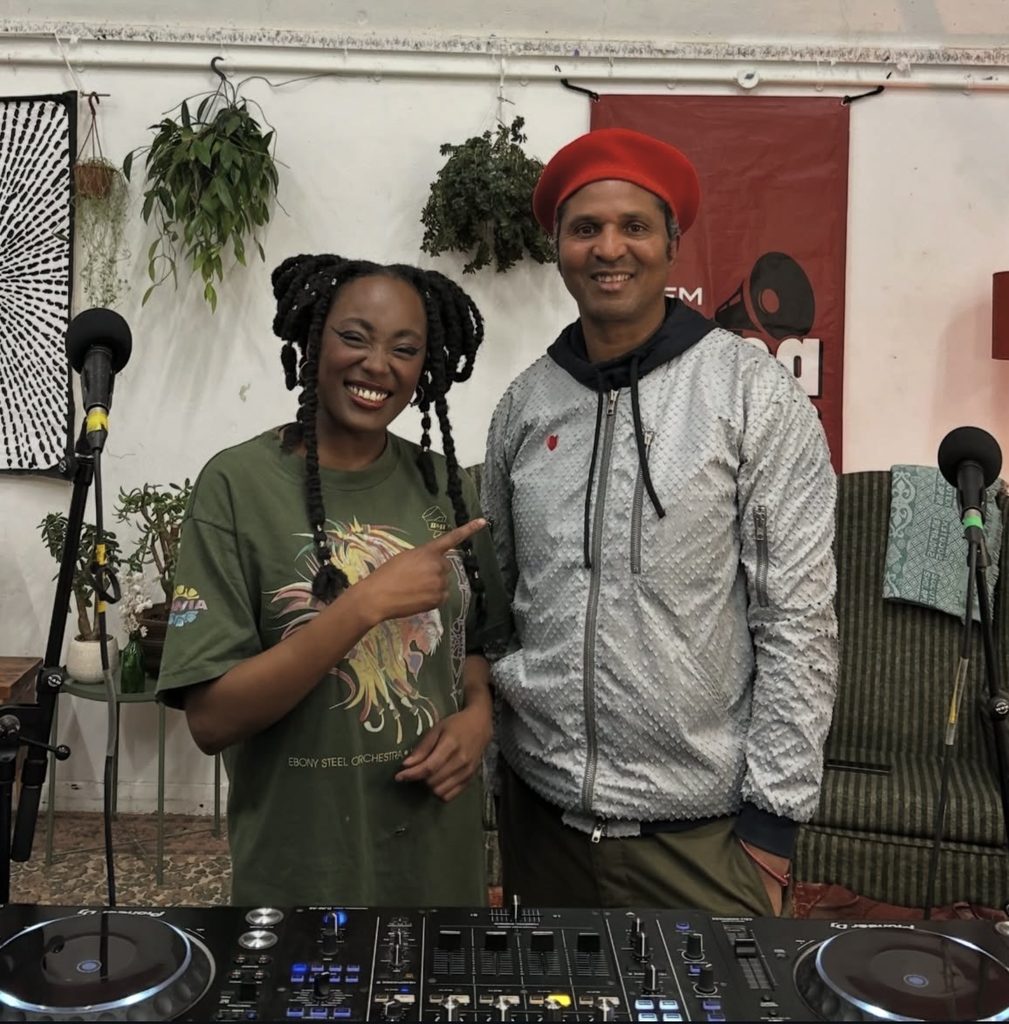
Stormy J and DJ Krust at Malcom X Centre 2025
There is another significant musical influence within this impressively creative family. Stormy J’s uncle was Drummie Zeb, the drummer and vocalist from British reggae band Aswad, whose willingness to experiment helped bring reggae to audiences around the world. What Stormy J particularly admires about her uncle is his ambition and fearlessness. Rather than treating musical genres as fixed boundaries, she has drawn inspiration from his willingness to explore unfamiliar sounds and to challenge commercial expectations. That influence is reflected in her own determination to push house music beyond its conventional structures.
Her wider musical tastes are equally diverse. Having grown up listening to hip-hop, soul, jazz and UK garage, she sees genres as interconnected rather than existing independently of one another. Interestingly, her journey into DJing this kind of music actually began through a slightly different route. Stormy J studied Multimedia Journalism at Bournemouth University, where radio formed a large part of her broadcast journalism training. In 2017, she aired her first show on Funky Essex 103.7 FM. Even then, she was already combining genres by playing grime and house music back-to-back. It wasn’t until 2019 that she taught herself properly how to DJ, inspired by the selectors around her at Westside Radio. Rather than simply playing one track after another, she began to recognise the creative possibilities of transforming and reinterpreting music through performance. Furthermore, she has always admired the rebellious and independent spirit of pirate radio. She cites Sue Carpenter, who established a pirate radio station in Los Angeles, as an important inspiration. Carpenter’s determination to continue broadcasting despite considerable obstacles left a lasting impression on her.
During the summer of 2024, after several years of experimenting with the idea of soca-house, Stormy J began to feel that she was approaching something distinct. Although she had already explored a variety of combinations of Caribbean rhythms with house music, the results hadn’t quite embodied exactly what she wanted to express. Determined to develop the jab-house sound further, she spent that summer dedicated to nothing but genre experimentation. Eventually, she arrived at a combination that felt right and coined the term jab-house.
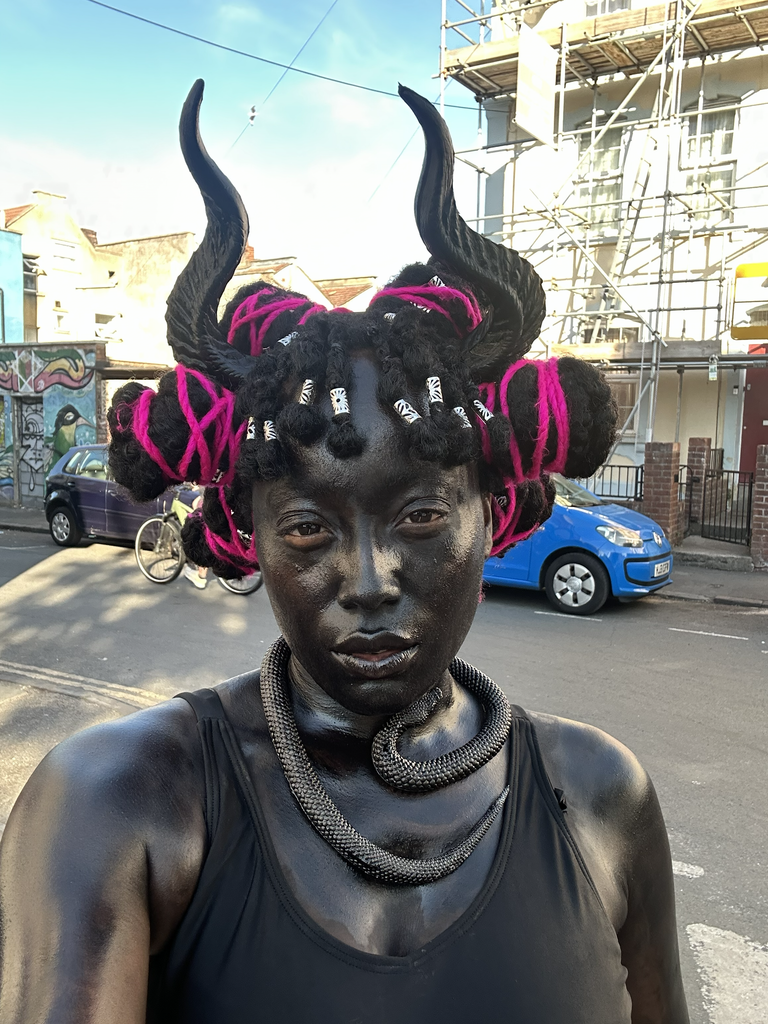
What emerged was not simply a faster variation of house music. Stormy J created a sound that could carry its own cultural identity and purpose. By bringing Grenadian jab jab traditions together with soca, house, techno and rave music, Stormy J had found a way to represent different aspects of her identity – without her feeling the need to compromise on any of them. As she explains: “I like to think of it as music that connects ancestry with the future.” That description feels particularly fitting given her family background. The choice of tempo is also interesting. At approximately 160 BPM, jab-house sits considerably faster than conventional house music. But Stormy J is keen to emphasise that speed alone doesn’t define this genre. For her, freedom is particularly important when exploring Grenadian jab jab, which she feels is frequently misunderstood and overlooked as part of Caribbean culture.
Developing an unfamiliar genre inevitably involves finding an audience willing to embrace something new, Stormy J found early encouragement from Bristol’s underground music scene.
Jonesy, Atki2 and Dub Boy, from the Bristol club night Ruffnek Diskotek, were among the first to recognise what she was creating. Having discovered her work online, they invited her to perform her first ever jab-house DJ set in early 2025. At the time, Stormy J was still living in Essex, and she was genuinely surprised that a Bristol club night had discovered her music. The connection, however, made sense. Ruffnek Diskotek’s residents had spent years championing music influenced by Caribbean sounds and rave culture, so they immediately understood the direction she was exploring.
The experience proved unexpectedly significant. Having developed such a strong connection with Bristol’s musical community, Stormy J decided to move to the city just a few months later.

In a way, it’s a lovely reminder of how an opportunity within grassroots music can have consequences far beyond just a single performance. In this case, one booking really did change the direction of her life forever.
But Stormy J is only just getting started, and her ambitions extend beyond simply establishing jab-house as a recognisable sound. For decades, Caribbean music has influenced the development of dance music across the world – appearing through samples, rhythms and musical ideas. Stormy J wants to see those contributions recognised more explicitly, with Caribbean culture treated not merely as an influence but as a central part of electronic music’s identity and future. She hopes that jab-house can honour previous generations and encourage further future artists of all genres to challenge musical conventions, too.
This underlying vision that connects everything – from the nostalgic influence of her grandfather’s garden shed in Acton to the underground dancefloors where her own music is now finding an audience – is what makes Stormy J such a unique, wonderful artist. Her ambition to create, experiment and preserve cultural expression is genuinely inspiring, creating something new that doesn’t leave the past behind.
And as she puts it: “Caribbean electronic music is the future.”
Discover more and follow Stormy J: https://linktr.ee/stormyj_music