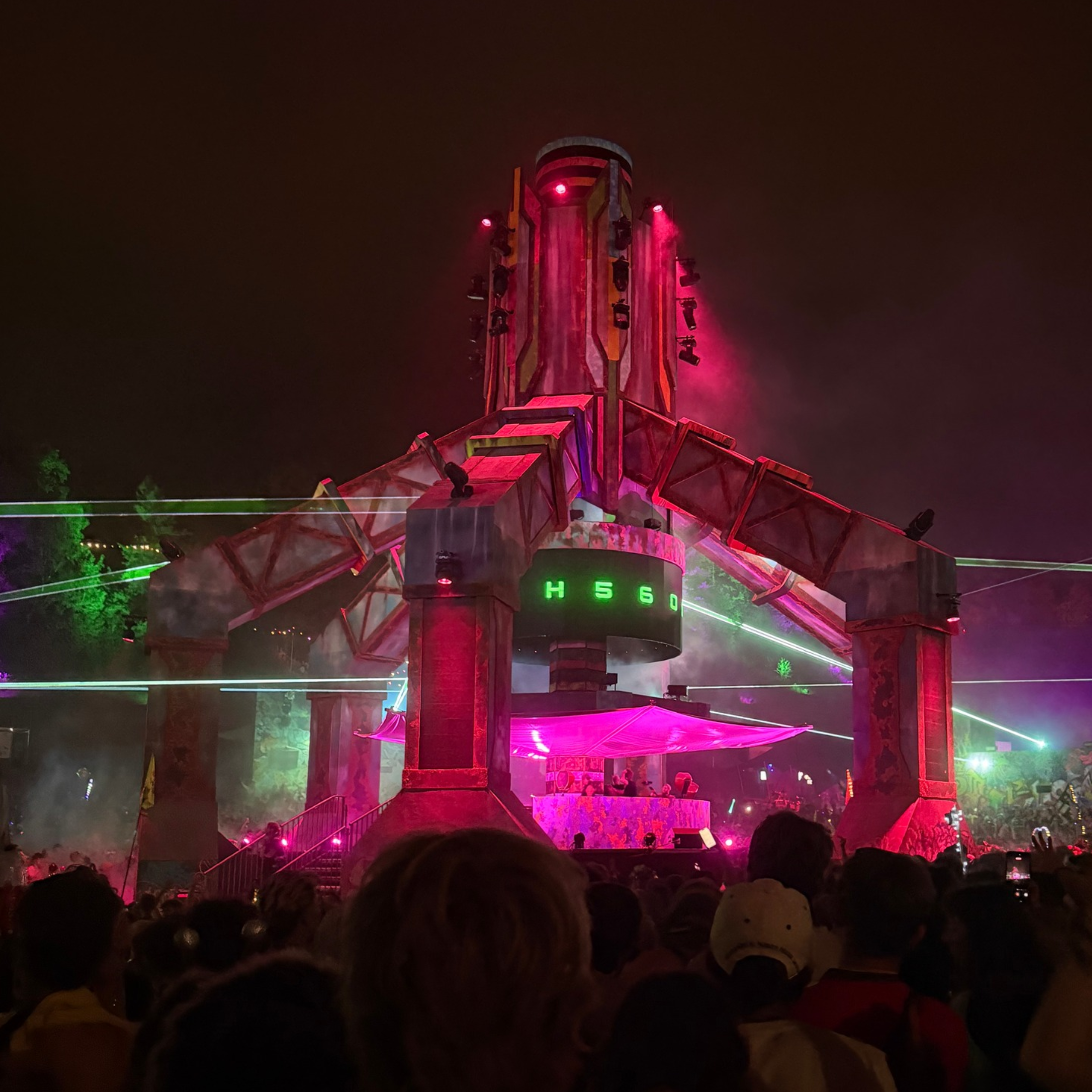
It’s late autumn, but next summer’s festival line-ups have been dropping already: NOISIA at Boomtown, Four Tet at Love Saves The Day, and Nile Rodgers & CHIC at Y Not Festival.
For me though, the coming season will break a lifelong spell of UK festivalling. Naturally, the promise of hot weather and cerulean waters are a draw to foreign festivals – which is what motivated me to fork out for the tickets – yet I’m sceptical that partying abroad will achieve the faraway feeling of a festival like Lost Village or Boomtown.
A creature of habit, I’ve been a Boomtown loyalist for about the past ten years. Anyone who’s frequented its fictional city and cult immersive madness will understand why. There’s something about spending a weekend as a citizen of its rainbowish chaos that lives within you long after you’ve left, no matter who you decide to be whilst you’re there.
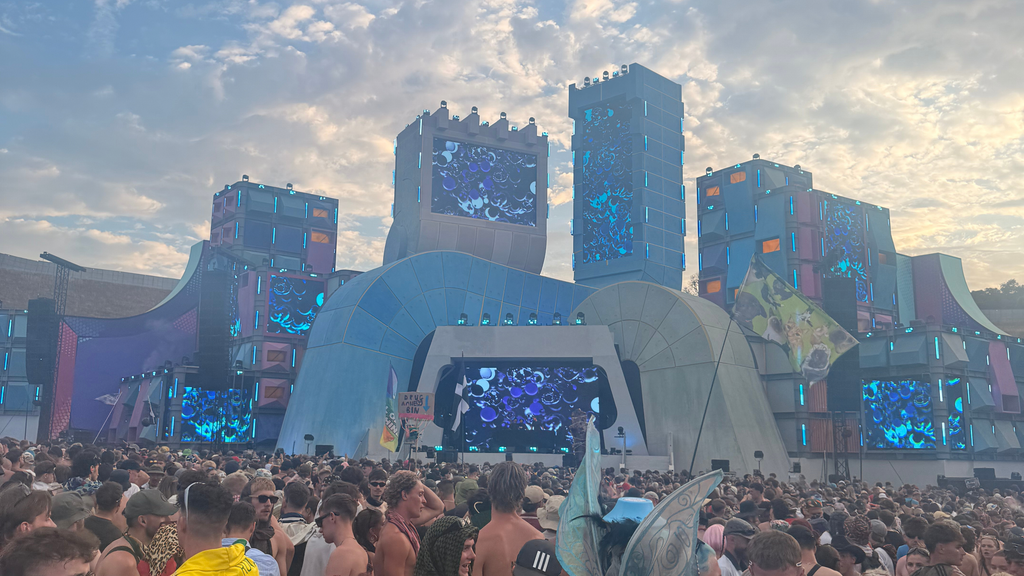
Boomtown is the IRL equivalent to falling into an internet rabbit hole, except it will open your mind, rather than narrow it. It’s a place where you can bounce around and trade a button for entrance into a whole other district. Once the marks from your rucksack have faded, you’re an ally to its cause and nothing matters beyond that.
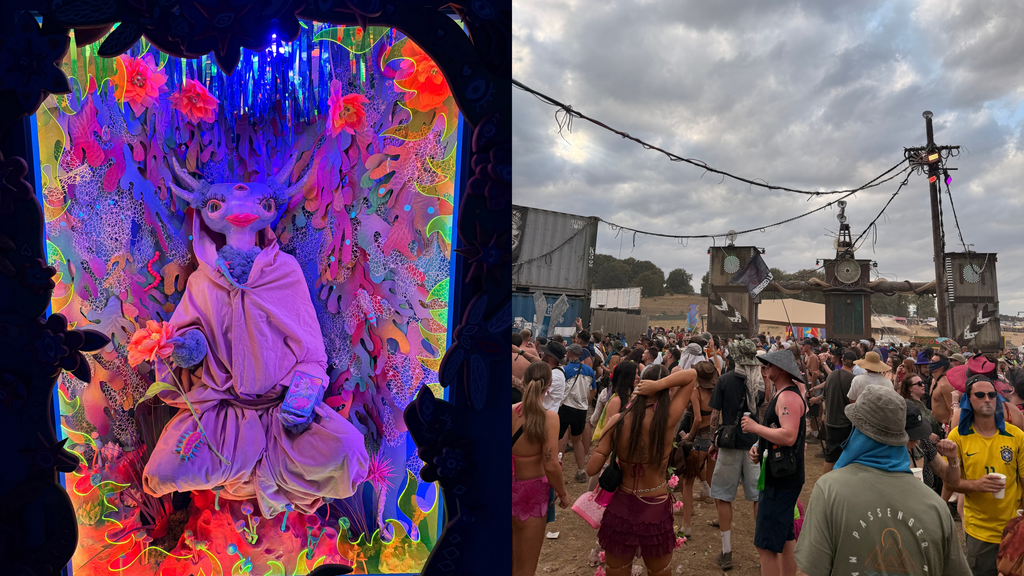
There’s something precious about being given an excuse to let go. To escape from reality and put the world to rights by discoing with a stranger. Arguably though, it’s not the music that makes these experiences so all-encompassing. Boomtown’s hand-built sets, miniature caverns, and actors in character make it almost impossible not to get carried away with the spirit of things.
But this kind of bliss shouldn’t be mistaken for ignorance. For one, whilst Boomtown is a space to disconnect, it offers opportunities to approach real-world issues from a distanced place of play. With social commentary dotted throughout village artwork, many of its storylines have also involved elections and summits. Every year I’ve attended has crescendoed with a march.
Of course, you don’t have to go to an expensive festival to partake in activism. But perhaps radical action feels more accessible when you’re less in your head. By playing a different role, maybe we’re able to tap into undiscovered parts of ourselves, which we’ll later take home.
At a time where fascism is on the rise, the freedom of escapism feels more important than ever. But where many in the UK are also feeling the pitfalls of having less disposable income, immersive experiences aren’t a luxury everyone can afford. Again, you might argue a festival isn’t the only means of taking a break from reality, but when we consider the attack on creativity AI has inflicted, productions like Boomtown remind us what’s worth investing in.
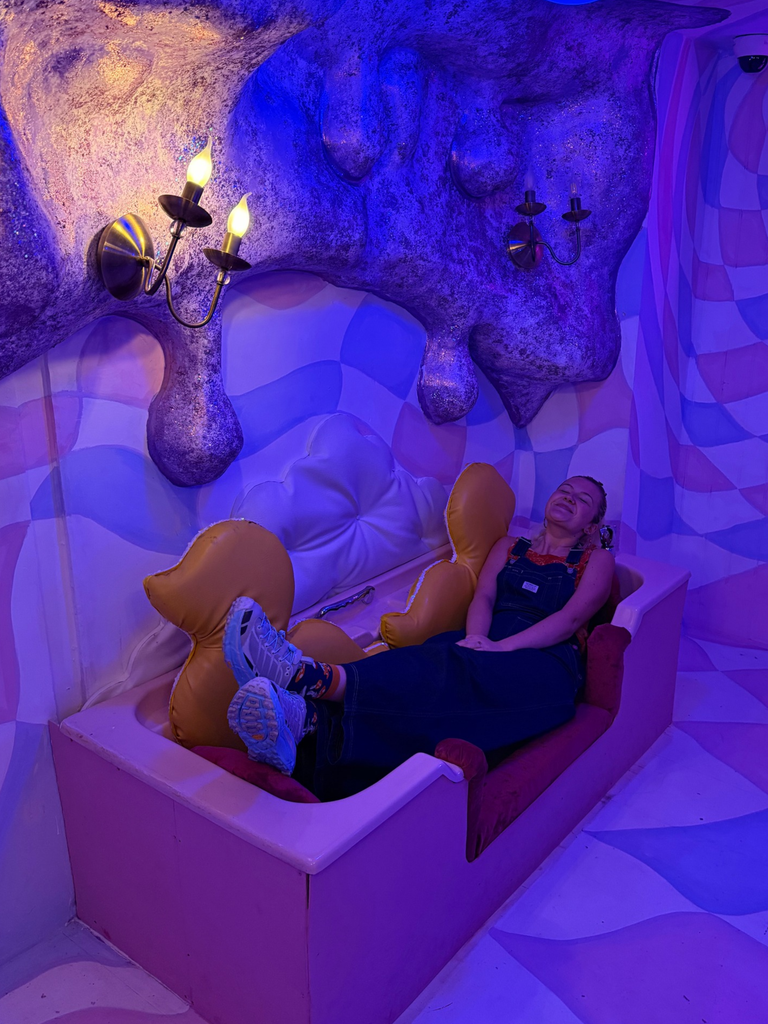
Recently though, these liberations have become more accessible. Exhibits like Absurd City in London are just as playful, but with permanent homes. Opened last month by Wake The Tiger (the makers behind Boomtown), its inception marks a second quote-unquote “amazement park” after Dream Factory, their first installation which arrived in Bristol in 2022. Offering interactive adventures to an audience beyond the festival scene, the experience takes 2-3 hours, rather than the commitment of a whole weekend. Hence, it’s also more modestly priced.
Previously, engaging environments seemed exclusive to live-action roleplaying or horror attractions like the London dungeons. But when every space is dreamed up, drawn out, and built from scratch – using thrifted, scrapped, and upcycled materials – these newer immersive exhibits not only encourage imagination, but crucially support it. The makers behind employing artists, dancers, and actors to bring these worlds to life. In a culture where businesses cut corners with AI-generated slop and replace people with chatbots, their commitment to human creativity feels radical.
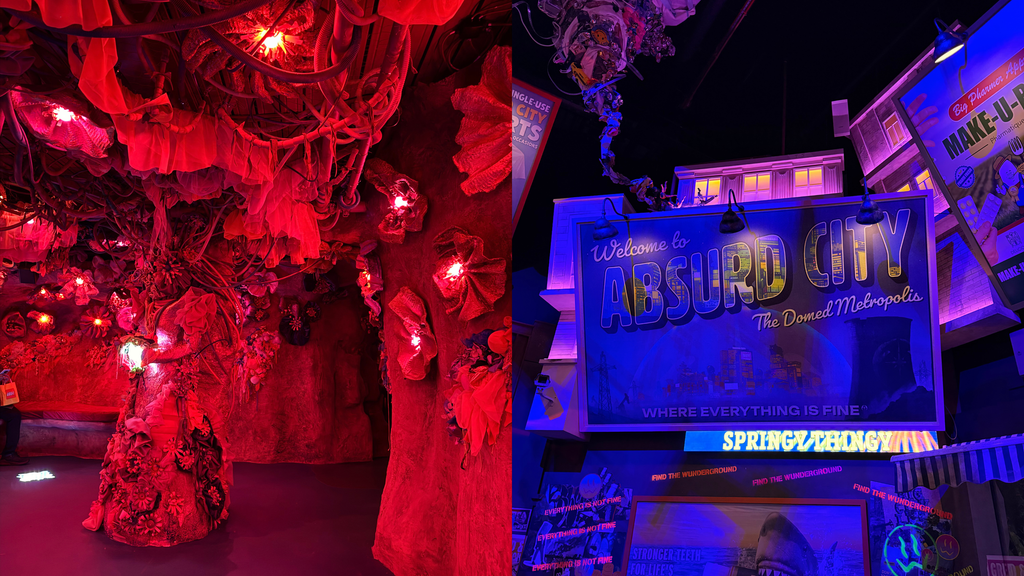
Having personally visited Absurd City during its opening weekend, it was awe-inspiring to see a company putting craft back on its pedestal. Teeming with dreamscapes on steroids and codes granting access to other areas, exhibits like these are also a way forward in taking us out of the heavy mundane and shaking up our perspectives. Not to mention they uniquely demand attention, tasking guests to overthrow a fictional, techno-fascist underworld.
In researching the lasting effects of immersive experiences, I found evidence to suggest that changing our environments is key in diminishing ruts and even recovering from burnout. According to Adam Galinsky of Columbia Business School, engaging with new tastes, smells and sensations flexes different synapses in the brain, therefore encouraging creative thinking. Another study from Miami and New York universities found that participants who visited a wider set of places per day experienced an “upwards spiral of positivity” compared with those who travelled less. So, when we normalise escapism, we normalise self-care.
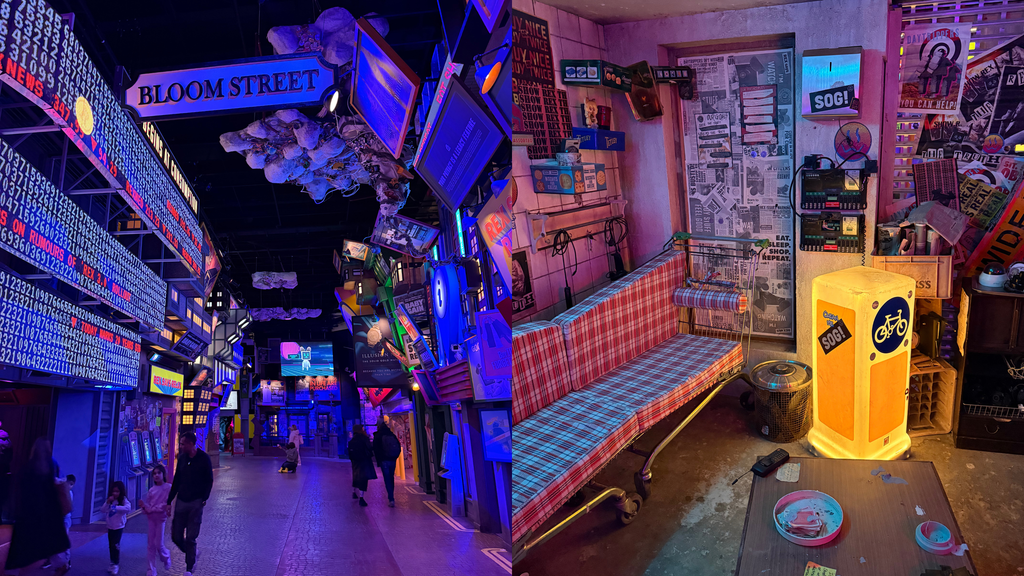
Overall, what I found most special about Wake The Tiger’s latest makerspace was the fact it left me feeling the same way I do when I leave Boomtown. Despite spending an afternoon some fictional light-years away, I exited feeling more connected.
Whilst it’s difficult to pinpoint, I put the feeling down to the kind of hope immersive experiences can afford us all. Perhaps, it’s the hope that creativity is still valued. Or the hope there are spaces to find relief, despite the pressures of a hyper-productive society. Maybe, it’s the hope that returns once you’ve simply allowed yourself to properly reset.
In an age where technology tempts us to think and show up less, entering environments like these ask more from us. They encourage us to take real action whilst feeling miles away from it. To be present, take the time to notice, see things differently, and embrace the artistry when you’re fortunate enough to stare it in the face.
To get lost in order to return.