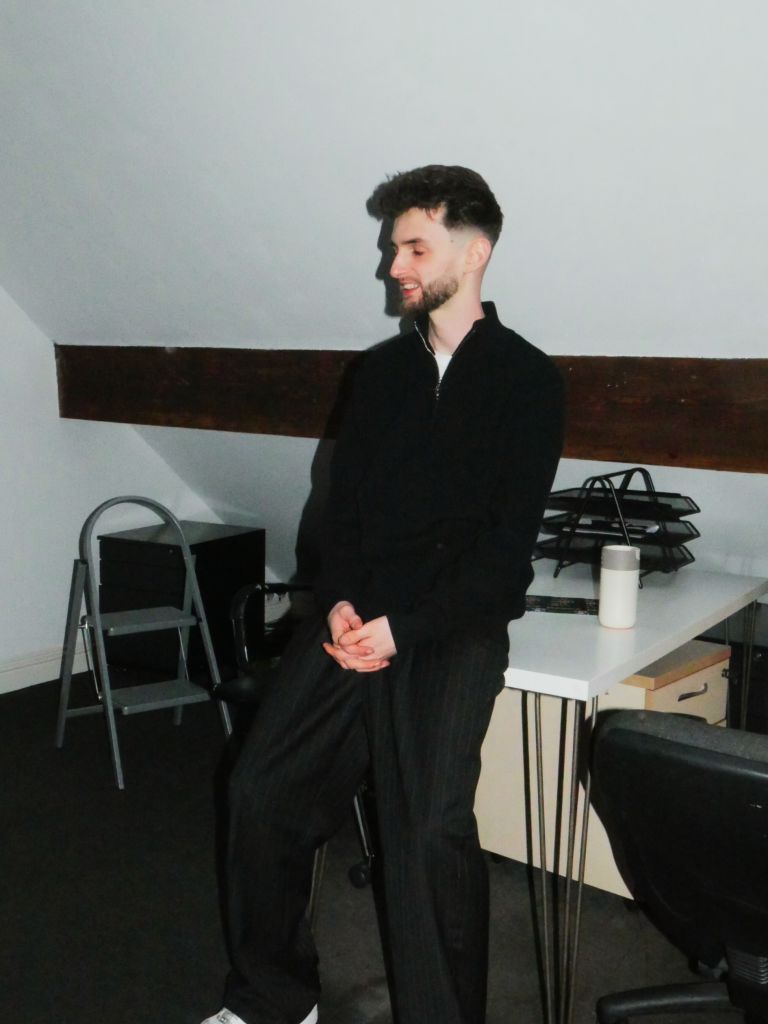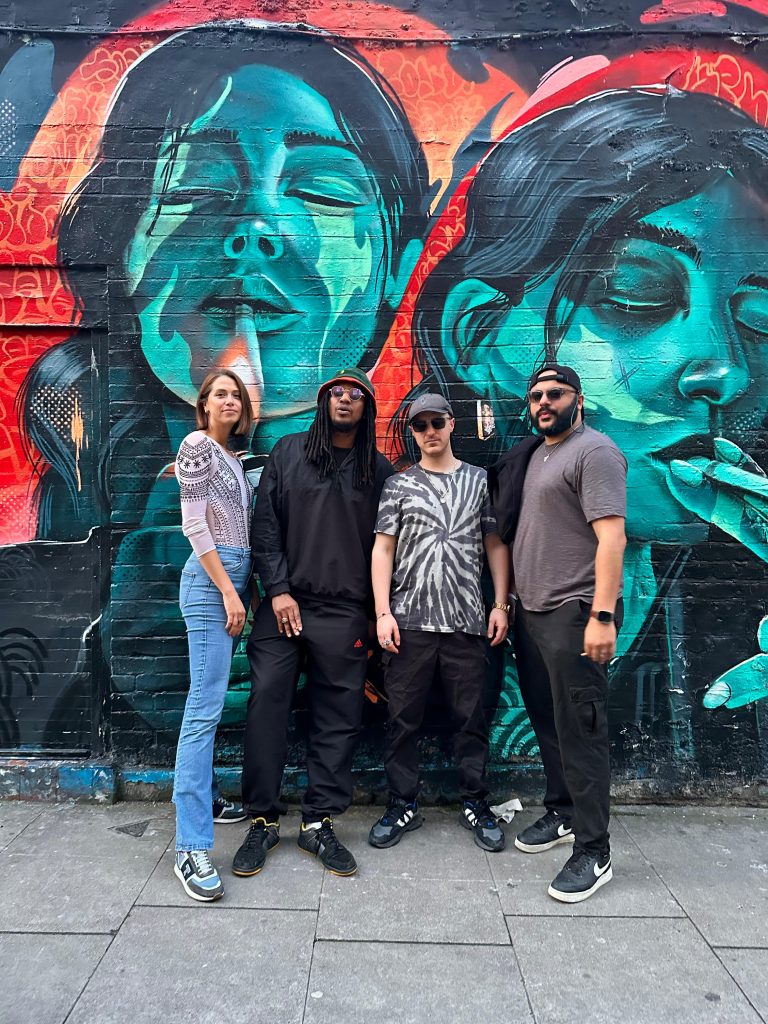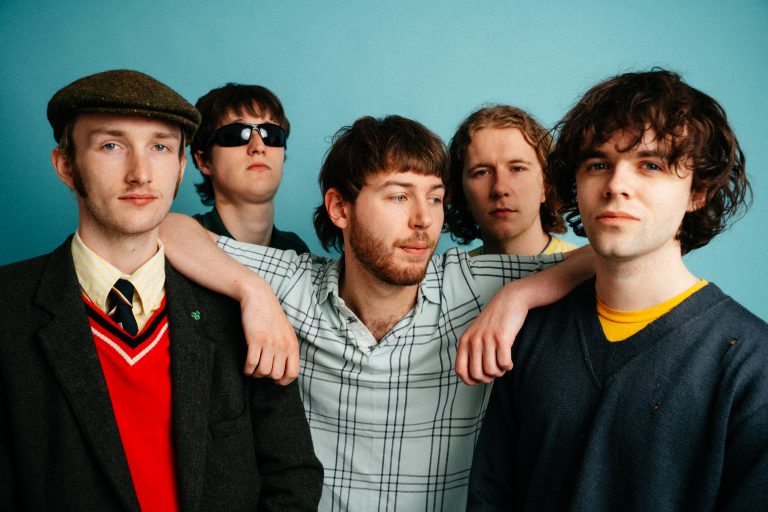

There are some artists who quietly refuse to disappear. Not because they’re chasing headlines or numbers, but because they simply cannot stop creating. Maddox Jones has been on my radar for a while now, and what always struck me was his determination – not loud or ego-driven, but steady and relentless in the best way. The kind of perseverance that only comes from loving the craft itself. After this interview, that respect has only deepened. Because behind the anthemic choruses and big-stage moments is a story of resilience, self-examination and choosing meaning over shine.
Maddox grew up in Northampton, but not in a way most people would expect. He spent his childhood in a Christian commune just outside town – an environment he describes as intense and sheltered, yet filled with music and community. “I grew up in a pretty unconventional environment,” he tells me. “It was intense, sheltered in some ways, but also full of music and community.” That combination of structure and isolation left its mark. Northampton itself, with its underdog grit and lack of gloss, shaped him too. “It’s not flashy. You have to build things yourself. I think that gave me hunger.” There’s something in that which feels distinctly Northampton – no one hands you the blueprint, you sketch it yourself.
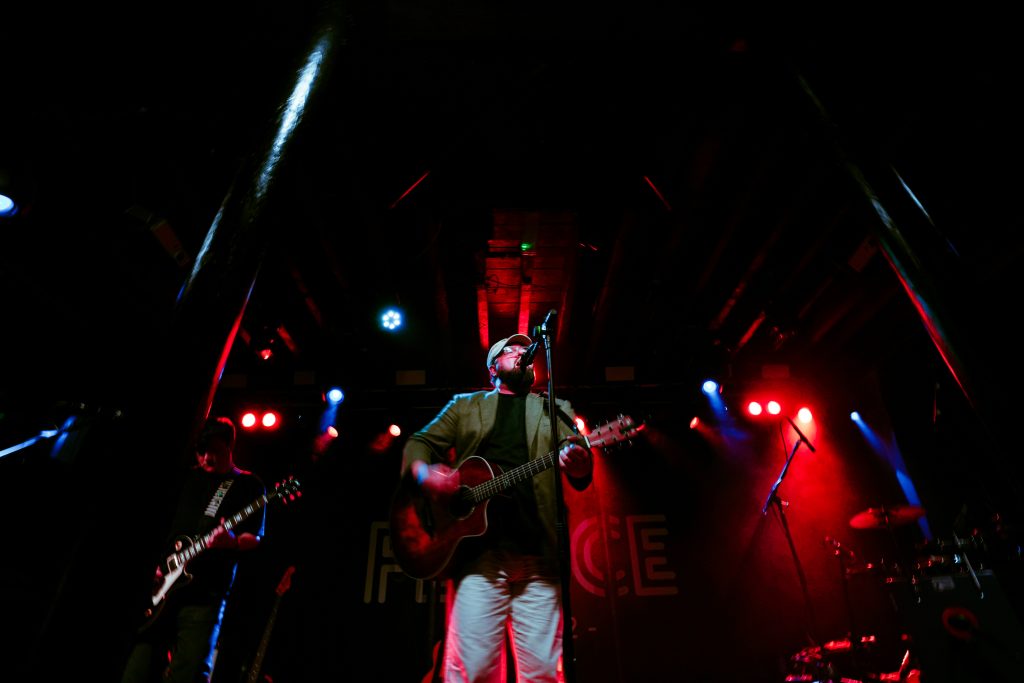
Music was always present, but it wasn’t immediately a career plan. It became something more when he realised it was the only place his thoughts seemed to settle. “I remember writing songs as a teenager and thinking, this is the only time my head feels quiet.” That line stayed with me. For a lot of creatives, art begins as survival before it ever becomes ambition. After university, he was signed, and for a brief moment it all felt official. But it was being dropped not long after that became the real turning point. “Getting dropped was the moment it became a calling,” he says. “I had to decide whether I loved it enough to carry on without the shiny stuff. I did.” It’s easy to celebrate the signing. It’s harder to stay when the contract disappears.
Guitar came first for Maddox. He learned to play so he could write, and that rhythmic, percussive foundation still underpins his songs now. Even when he’s sat at a piano, he says he’s thinking like a guitarist. The instrument gives his music momentum, but it’s the songwriting that gives it meaning. He describes his sound as “anthemic, emotional pop rock with a bit of grit” – big choruses, honest lyrics, something people can shout back at him after hearing it once. Influences like Bruce Springsteen and Ryan Adams show up in the storytelling, while bands like Coldplay inspire the sense of scale. But more than anything, it’s life that shapes the sound. “Therapy, heartbreak, faith, losing faith, getting back up again – it all finds its way into the songs.” There’s no detachment there. It’s lived-in.
Being from Northampton has grounded him in ways he doesn’t take for granted. Places like The Roadmender were formative – seeing touring artists pass through town and realising it was possible. “There’s something about Northampton artists,” he says. “We graft. No one hands you anything.” Playing his hometown still hits differently. “There’s history in the room. Family. Old friends. Teachers.” That sense of roots feels important, especially in an industry that can pull you away from yourself if you’re not careful.

Songwriting, for Maddox, is rarely abstract. He admits he’s tried hiding behind clever metaphors, but the songs that resonate most are the ones that tell the truth. Internal Family Systems therapy has shaped his writing deeply, particularly on tracks like Talk to You. “A lot of my writing comes from conversations with my younger self,” he says. He’s constantly observing, half present and half narrating the moment. It’s vulnerable work, but that vulnerability is the point. The honesty is what connects.
Career highs have come in waves. Supporting artists like Will Young and Lucy Spraggan on tour stands out – walking onto stages where the audience doesn’t know you and winning them over song by song. “That feeling is addictive,” he says. But equally defining was releasing his album Waiting for the World to Turn independently and watching it find its audience. That moment proved he could build something on his own terms. In a world obsessed with quick wins, independence can be the bravest move.
The industry, of course, hasn’t been smooth. Being dropped by a major label knocked his confidence, and there were years of questioning everything. Add mental health struggles and self-worth into the mix and the path hasn’t been linear. What he’s learned is that resilience is rarely dramatic. “It’s just getting up again,” he says. “Sending the email. Writing the next song. Playing the next gig even if twenty people turn up.” There’s something powerful about that simplicity. It’s not glamorous, but it’s real.
Right now, Maddox is building towards his next chapter. He’s writing constantly, shaping a body of work that feels hopeful but not naive. “Bigger sonically, braver lyrically,” he says. Collaboration is playing a larger role too, as long as it feels authentic. Live, he wants to grow headline shows in 2026 and deepen the connection with audiences – maybe even take it further afield. But the ambition feels balanced. Not frantic.
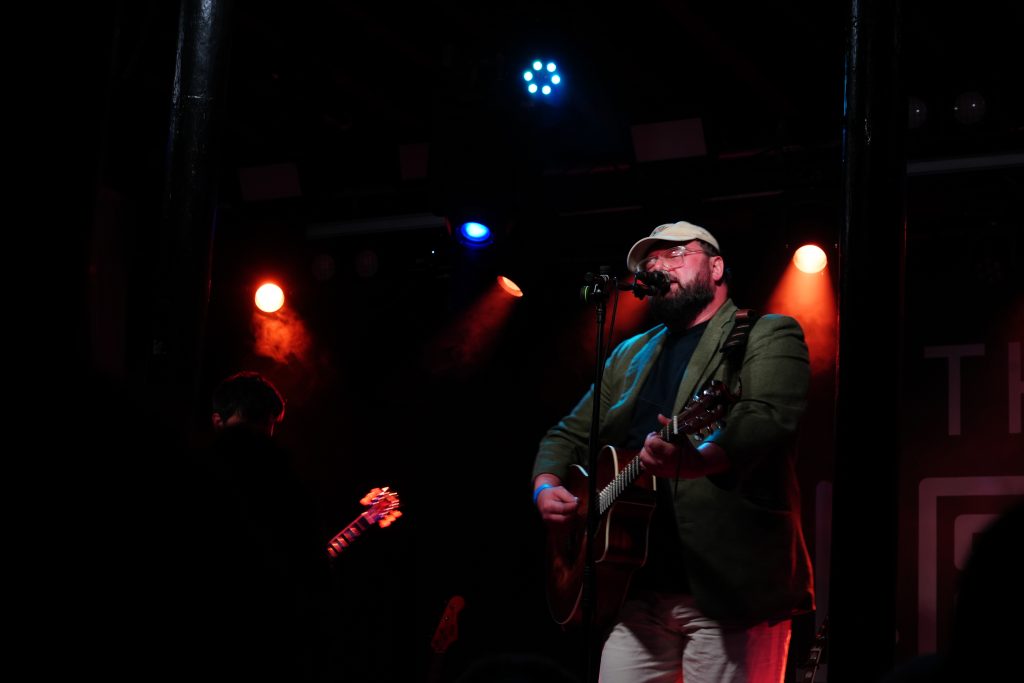
Looking ahead, his focus is on longevity and meaning rather than metrics. Creatively, he wants to keep pushing, to avoid repeating himself and make records that feel timeless. Personally, it’s about staying mentally healthy and enjoying the process. “Success for me now is longevity and meaning, not just numbers.” That shift in perspective feels significant. So many creatives burn out chasing milestones that don’t fulfil them. Hearing someone articulate that balance so clearly feels refreshing.
When I ask what advice he’d give to young artists, his answer is grounded. “Be patient. Get better at your craft. Write loads of bad songs so you can write a few great ones. Don’t build your self-worth on streaming numbers. Build real relationships.” Then he adds something that feels deeply personal. “Your story is your superpower. The stuff you think disqualifies you is usually the thing that makes you different. Lean into it.” That line alone is worth holding onto.
Creative journeys are rarely straight lines. They twist, stall, detour and surprise you. What struck me most about this conversation wasn’t the milestones, but the willingness to keep returning to the love of it. Fame, wealth and numbers are loud distractions in this industry, but they don’t mean much if you’re not happy. Maddox Jones feels like someone who has done the inner work to understand that. And perhaps that’s why his music carries weight – because it’s not chasing validation. It’s chasing meaning.
Listen and follow Maddox Jones: