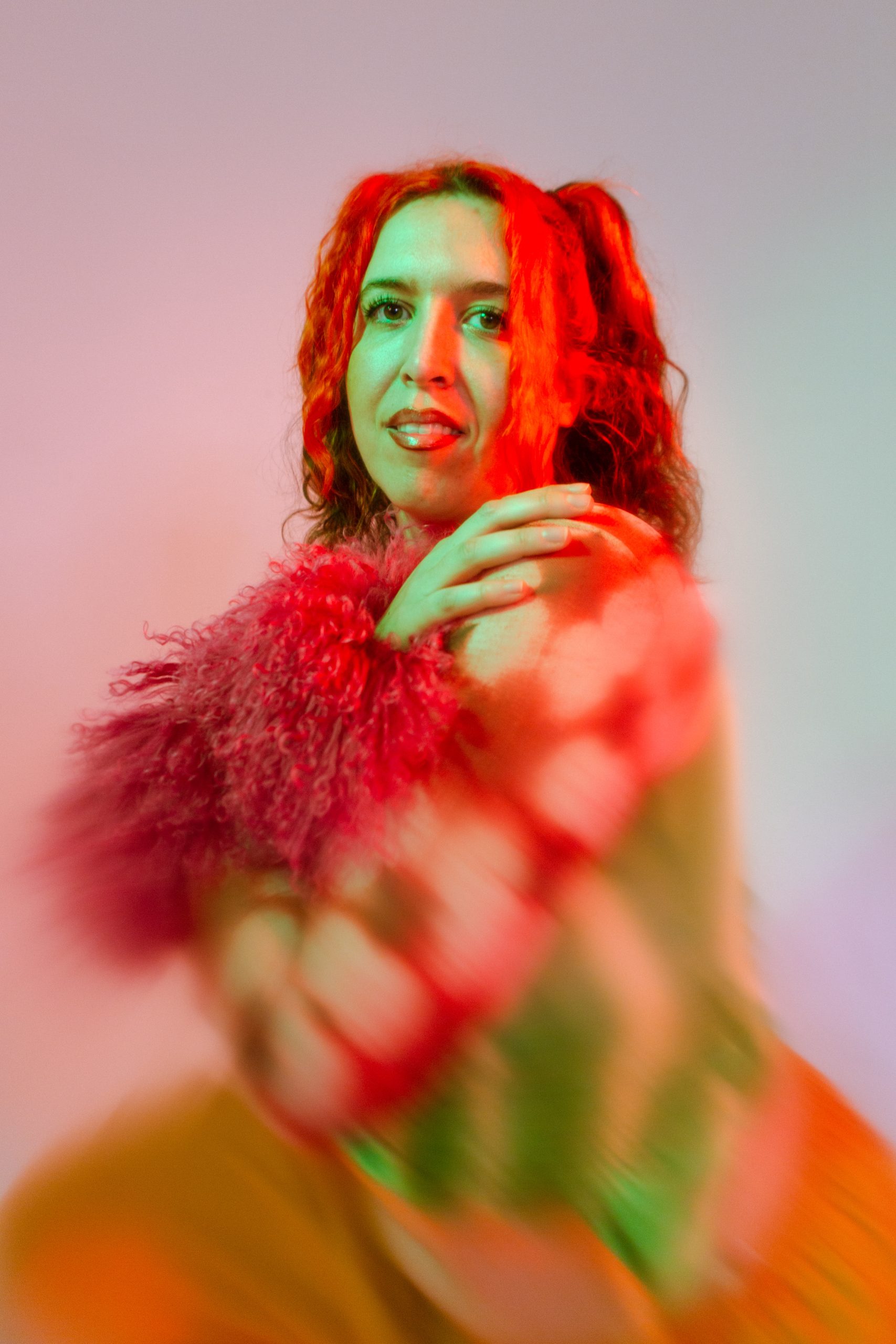
There are some people in music who don’t just exist within it, they actively reshape how it feels to be part of it. MINA (aka Hannah) is one of those people. Not just through the music she creates, but through the spaces she builds and the opportunities she opens up for others. I first came across her through her Funding with Mina page, and it stopped me in my tracks. Here was someone not only navigating the industry, but actively helping others do the same. The more I explored, the clearer it became – this isn’t just about music, it’s about impact.
MINA’s story begins in Oxford, where music was always present in the background, long before it became something she actively pursued. Her dad played a big role in that early exposure, filling the house with everything from David Bowie and New Order to Daft Punk. “He’d have music blasting on weekend mornings,” she says, and those moments clearly left their mark. Live music came early too. Glastonbury at 14, Burning Man at 19 – experiences that most people only encounter much later, if at all.
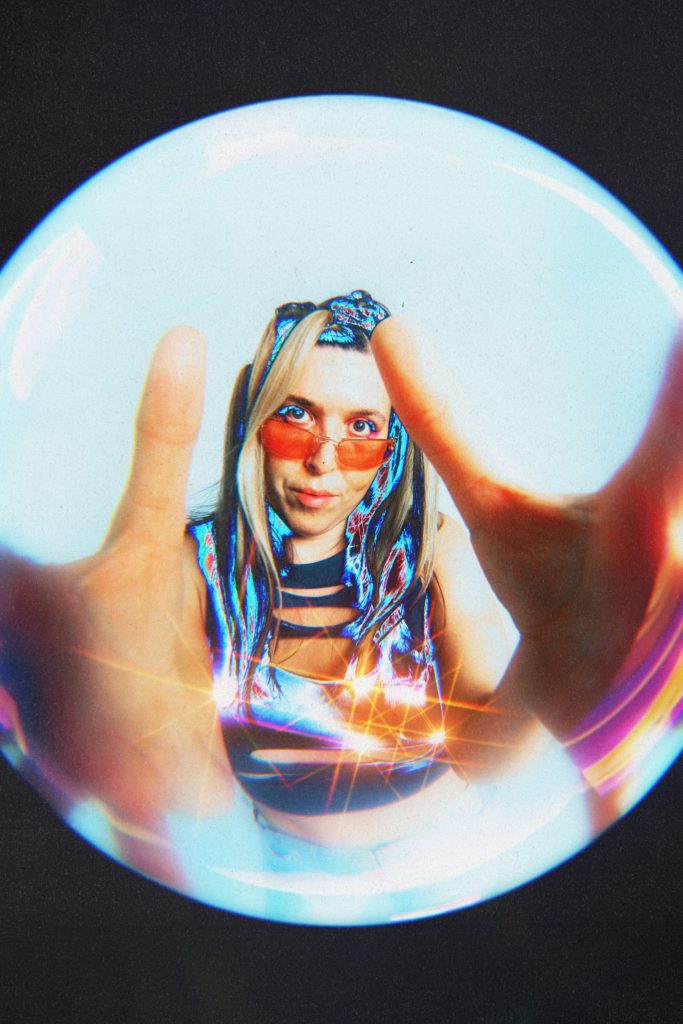
But like many artists, her relationship with music deepened outside of those early influences. As a teenager, she found herself drawn into rave culture, sneaking into drum and bass events and festivals underage, absorbing the energy of those spaces before she fully understood them. Dubstep, jungle, dancehall, reggae – her tastes were broad, instinctive and rooted in movement. By the time she reached university in Leeds, those influences had started to take shape in a more defined way. Nights at SubDub and Beaverworks became formative, not just for the music, but for the sense of community they created. She began DJing at house parties, cramped basements transformed into makeshift clubs, learning how to read a room and create something that people could feel.
The shift from listener to creator came later, but when it arrived, it landed with clarity. A relationship with a grime producer introduced her to Logic Pro X, and what could have been an intimidating learning curve instead felt natural. “I found it surprisingly easy,” she says. “When something comes naturally to you, it makes you want to do more.” That moment opened the door to something bigger – not just a new skill, but the realisation that music could be more than just a passion. It could be a path.
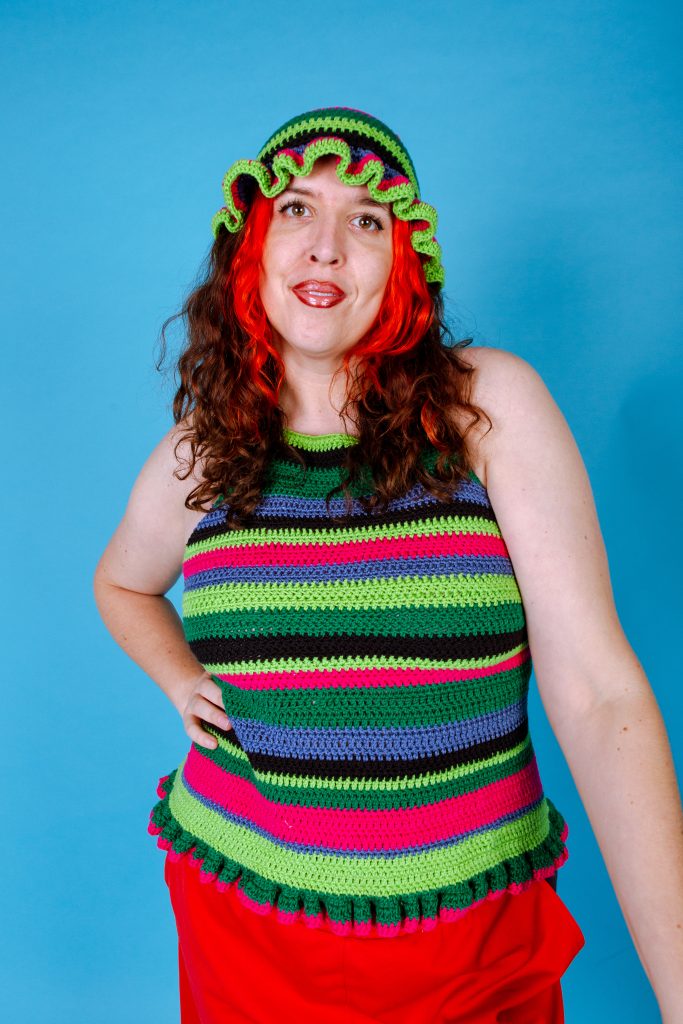
From there, her approach to production developed quickly, shaped by curiosity and collaboration rather than rigid structure. MINA isn’t interested in staying within one lane. Her sound is built through what she describes as “cross-pollination” – blending different genres, cultures and ideas into something that feels distinct. Early influences came from UK funky, left-field bass and dancehall, but over time her references have shifted. Now, her work draws on soca, dennery segment and Nigerian street beat, pushing towards something faster, harder and more intense.
There’s a clear thread running through it all – a fascination with tension and release, with building moments that feel both euphoric and unpredictable. It’s something she’s been exploring more deeply through live performance, as well as through her collaborations. Time spent in Ghana working alongside artists like Gafacci and Bryte has been particularly influential, shaping both her sound and her perspective. “If I’m inspired by someone, I’ll reach out and ask to work with them,” she says. That openness has become a defining part of her practice.
But what sets MINA apart is that her work doesn’t stop at the music itself. Alongside producing and performing, she has consistently invested time and energy into building projects that support the wider creative community. It’s not something that came as an afterthought – it’s always been part of her approach. “I’ve been running parties for over ten years,” she explains, “and doing things behind the scenes to support artists.” There’s a clear sense of responsibility in how she moves through the industry. Access to knowledge, networks and opportunities isn’t something to hold onto, it’s something to share.
That ethos is perhaps most visible in Club Soft, her alcohol-free party concept. Born from a shift in her own relationship with nightlife, the idea challenges some of the assumptions that have long defined club culture. Late nights, heavy drinking, the pressure to keep bar sales high – these are all things that can exclude people, whether intentionally or not.
Club Soft flips that on its head. It creates space for a different kind of experience – one that happens earlier, removes the focus on alcohol and invites a wider range of people onto the dancefloor. “It’s about asking who these spaces exclude,” she says. And more importantly, what happens when you change that.
The response has been powerful. “It’s the most meaningful feedback I’ve ever had for an event,” she explains. There’s something deeply moving about creating a space where people feel comfortable, included and connected. It’s a reminder that nightlife doesn’t have to look one specific way to be valid.
That same drive to make the industry more accessible runs through Funding with Mina, a platform designed to help creatives navigate the often confusing world of grant funding. For many artists, funding feels out of reach – too complicated, too opaque, too competitive. Mina saw that gap and decided to do something about it.
“It’s a skillset I’d developed over time,” she says, after finding success with her own applications and helping friends do the same. What started informally has grown into something much bigger, offering workshops, mentoring and guidance that demystifies the process. Her advice is refreshingly honest. Rejection is part of it. It’s rarely personal. And the more you apply, the easier it becomes to understand how to communicate your ideas.
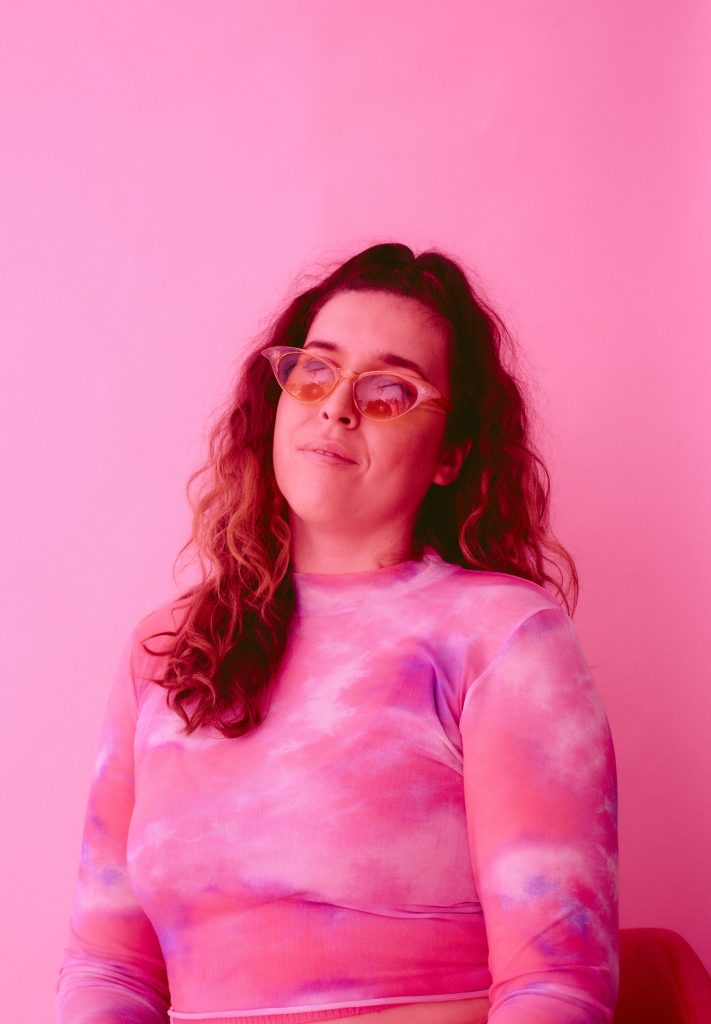
Across everything she does, there’s a clear through line – a belief that the industry can be more equitable if people actively choose to make it that way. “If we think about what we can offer as much as what we can take,” she says, “it becomes a more enjoyable place to work.” It’s a simple idea, but one that feels increasingly important.
Right now, MINA is balancing multiple projects, each pushing her in new directions. She’s developing a live electronic set based on a recent collaboration with Ugandan artist Maganda Shakul, with plans to perform both solo and together in the future. At the same time, Club Soft continues to grow, with more events planned and expansion into a new city on the horizon, alongside a large summer day party in London.
It’s a lot to hold, but there’s a sense that everything feeds into the same bigger picture. Music, community, access, collaboration – none of it exists in isolation.
If there’s one piece of advice she returns to, it’s the importance of showing up. Not just online, but in real life. “If you want to be part of something, go to it,” she says. Introduce yourself. Be present. In a world increasingly shaped by digital connections, there’s still something irreplaceable about being in the room.
Spending time with MINA’s story, even from a distance, leaves you with a sense of possibility. Not in a vague or idealistic way, but in something much more grounded. The idea that things can change if people are willing to build differently. That creativity doesn’t have to come at the cost of community. That there is space for more of us, if we choose to make it.
And that feels like something worth holding onto.
Listen and follow MINA: https://linktr.ee/minamusicuk
And check out Funding with Mina here.
Photos by: Alex Lambert, Cicely Grace, Lorcan Berg