
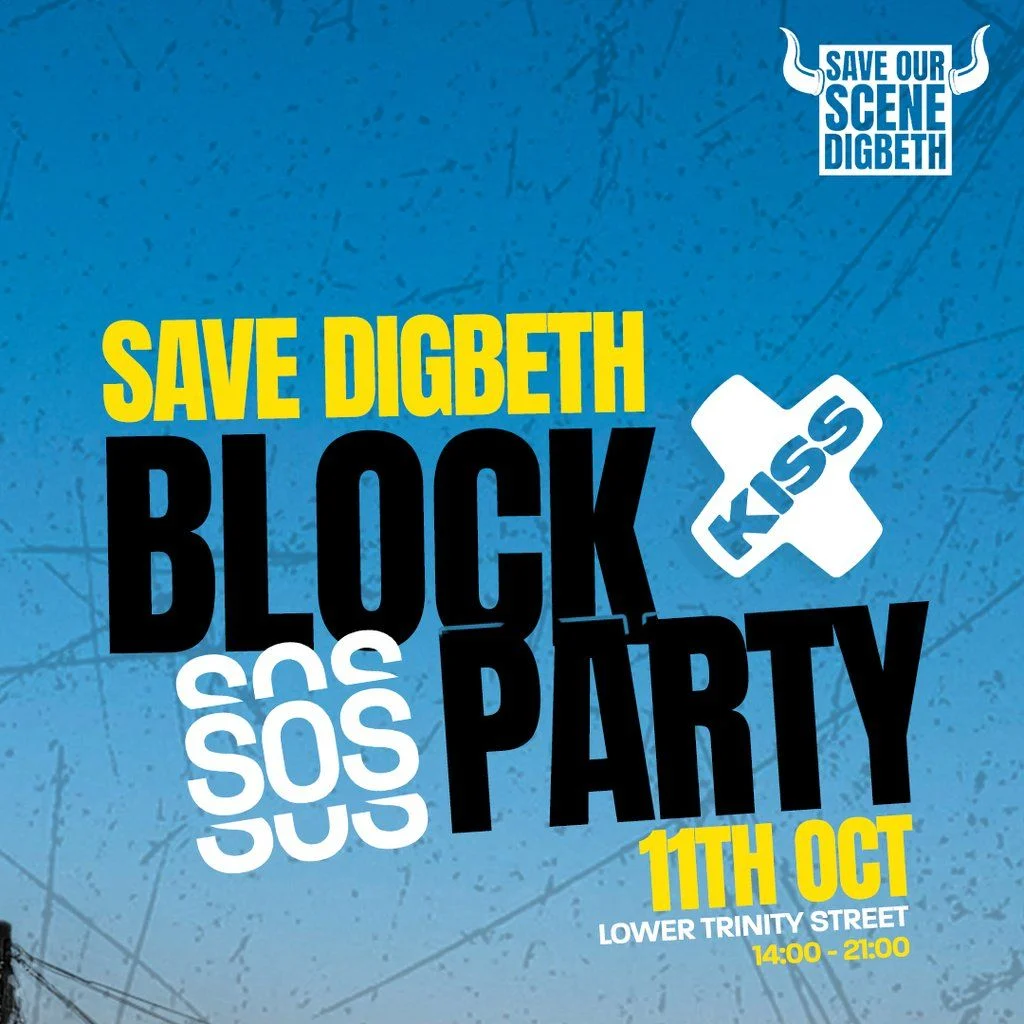
Digbeth isn’t just somewhere you go for a night out.
It’s an ecosystem.
For decades, this corner of Birmingham has been home to independent venues, clubs, promoters, DJs, bands, artists and businesses, with different genres, scenes and generations existing practically on top of each other.
Now, a significant part of it is under threat.
Current proposals for the £1.75 billion Midlands Rail Hub would expand Birmingham Moor Street Station and widen the Bordesley Viaduct through Digbeth. The wider project is designed to improve rail capacity and connectivity across the Midlands – something the campaign itself isn’t opposing – but the plans as they currently stand could demolish or displace more than 50 independent businesses.
Among the music spaces facing an uncertain future are XOYO Birmingham, Club Colette, The Night Owl, Mama Roux’s, Luna Springs, Suki10c and The Drop Inn.
These aren’t interchangeable rooms.
They’re places where new DJs and bands get their first opportunities, independent promoters build communities, different subcultures find homes and artists develop before moving onto bigger stages. Lose enough of those spaces at once and you don’t just lose a few buildings – you risk dismantling an entire grassroots ecosystem that has taken decades to grow.
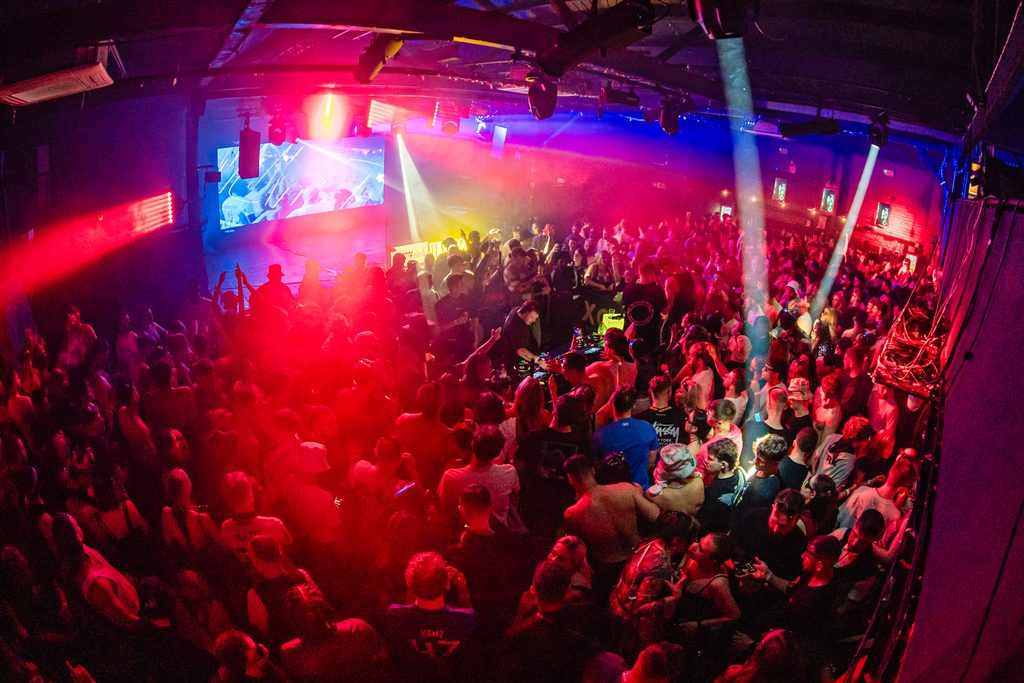
Selecta Events at XOYO by Prime Focus Photography
As the newly formed Digbeth Music Venues Alliance puts it: “We are not against progress. We are against progress that treats culture as collateral damage.”
That’s why this Sunday, 11 October, they’re making some noise.
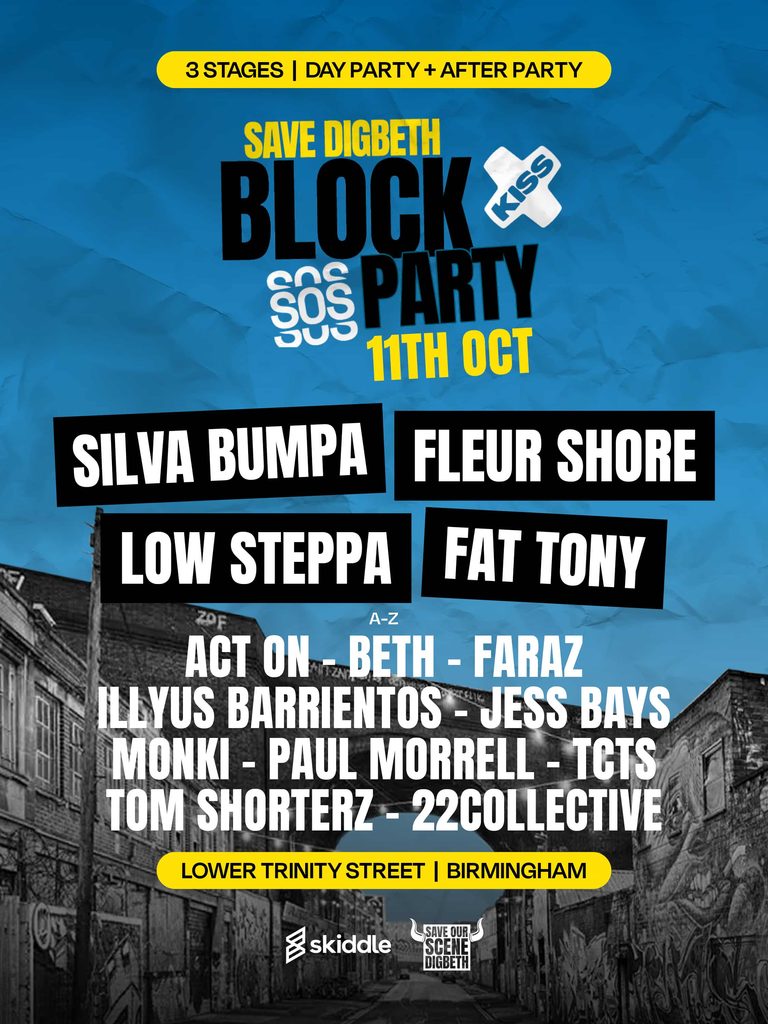
The Alliance has joined forces with Save Our Scene and KISS for the Save Digbeth Block Party, taking over Lower Trinity Street and surrounding venues from 2pm.
The Save Our Scene Fire Truck will become a street stage headed up by Silva Bumpa, alongside Fleur Shore, Tom Shorterz, Faraz and 22 Collective. Over at XOYO, Fat Tony, Low Steppa, Monki and Paul Morrell take over, while Club Colette hosts Illyus & Barrientos, Jess Bays, TCTS, Beth and Act On, before the party continues into the night.
It’s a proper party. But it’s also a very visible demonstration of exactly what is at risk.
Low Steppa, whose own story is closely tied to the area, said: “Those warehouse rooms and railway arches gave local DJs, promoters, and producers somewhere to start, and gave crowds somewhere to belong.”
That’s the bit that matters.
Grassroots culture can’t simply be demolished and recreated somewhere else. Scenes grow because of the people, venues, history and relationships around them. Digbeth has become one of the UK’s most recognisable music districts because all of those things have been allowed to grow together.
The first public consultation has now closed, but these plans are not a done deal. A further consultation is expected in summer 2027, with later stages to follow. Save Our Scene says more than 4,000 emails have already been sent to Birmingham Ladywood MP Shabana Mahmood, and the campaign is asking more people to add their voices now.
Save Our Scene founder George Fleming said: “Good development should protect the spaces that make a place what it is.”
We couldn’t agree more.
So, if Digbeth has ever given you a dancefloor, introduced you to an artist, given you somewhere to play, somewhere to promote, somewhere to work or simply one of those nights you’ll still be talking about years later, there are two very simple things you can do.
Write to the MP. Come out on Sunday.
Protect the places that make our scenes possible.
Save Digbeth Block Party
Sunday 11 October 2026
Lower Trinity Street, Digbeth, Birmingham
2pm onwards
Tickets: Get Save Digbeth Block Party tickets
Take action: Email Shabana Mahmood MP through Save Our Scene.